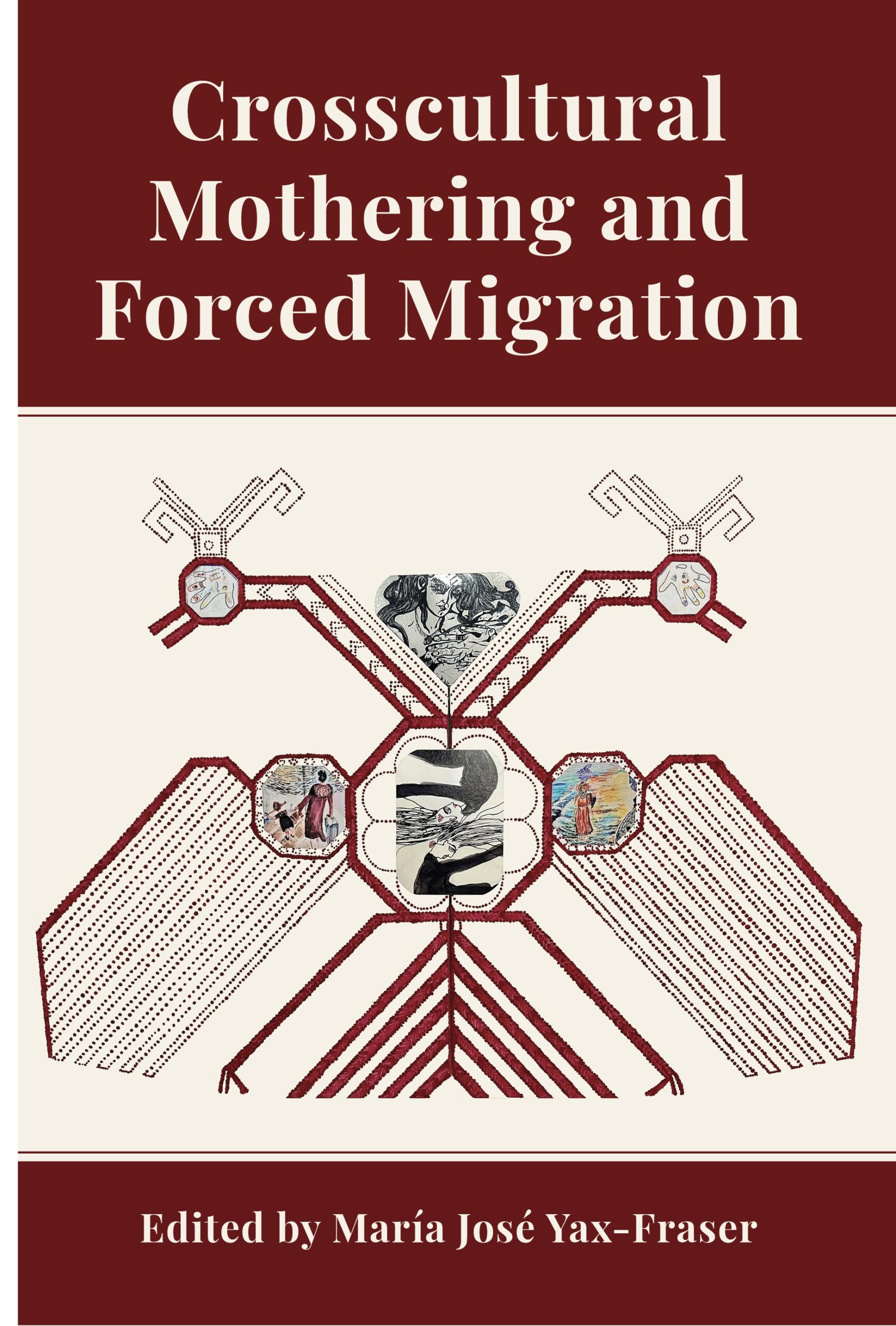
Price: $39.95
Page Count: 300
Publication Date: March 2027
ISBN: 978-1-77258-619-0
Mothering and forced Migration
Introduction: Crosscultural Mothering in the Context of (Forced) Migration
Part I
Theoretical underpinnings
Art: “The Path of mothering and migration Journey”
Chapter 1: The Choices and Processes of Crosscultural Motherwork
Part I
Defining Crosscultural Mothering
Part II
Crosscultural Motherwork
Part II:
Intersectional perspectives from the present to the past and the in-between
Art: Unnamed painting by Flavia Testa
Chapter 2: Mothering in Forced Migration:
The Eastern Mediterranean Route in the 21st Century
Art: Reflections of Transatlantic Mothering
Chapter 3: Birds of a Feather: A Story of Migration(s) and Motherhood(s)
Art: Unnamed Mini quilt by by Adriana Castano Kutty
Chapter Four: Resilience and Identity: A Black Mother's Journey from Panama to the Bronx
Art: Escape By Angela Zhang
Chapter 5: (Re-)Reading the Mother in Ocean Vuong’s On Earth We’re Briefly Gorgeous
Part III:
Building Communities
Art: Unnamed painting by Flavia Testa
Chapter 6: “All of my life I am a hard worker, I am a mother”: Reflections on Capacities of Women Living at the Crossroads of Forced Migration, Gender-Based Violence, and Racism
Art By Flavia Testa
Chapter 7: Should Mothering Be Defined Through Tears? Reflexive Mothering and Narratives of Location
Chapter 8: Cross-Cultural Mothering, Mama Circles, and Neoliberal Postfeminist Motherhood: Japanese Expat Mothers’ Communities in Singapore
Art: Unnamed painting by Flavia Testa
Chapter 9: Masking Motherhood: Ruptured Kinships and Cross-Cultural Mothering in Jen Sook Fong Lee’s The Better Mother
Poem: The woman I call ma by Jahnavi Gogou
PART IV
From the Internal to the international – Gender-Based Violence, Loss and international organizations
Art: Unnamed painting by Flavia Testa
Chapter 10: “Making it work: processes of displacement and resistance among women-headed households in Southeastern Sri Lanka.”
Short Essay: Mini Quilts, Pain, Ideas, and Hope By Adriana Castano Kutty
Art by Flavia Testa
Chapter 11: Once Bitten, Twice Hagued
Art by Adriana Castano Kutty
Chapter 12: Tender Ties: Migration and Motherhood in Ocean Vuong’s On Earth We Are Briefly Gorgeous
Endnotes
María José Yax-Fraser is a Mayan K’iche woman in the diaspora and a mother of three young adults. As a feminist artivist, academic and community research practitioner, she combines her artivism and arts informed research practice to explore issues that shape im/migrant women and girls experiences including mothering, migratory grief, housing, employment, accessibility and Gender Based Violence (GBV). María José is a founding member of the Immigrant Migrant Women’s Association of Halifax (IMWAH) and is an advocate of gender equality, equity and the advancement of immigrant and migrant women.