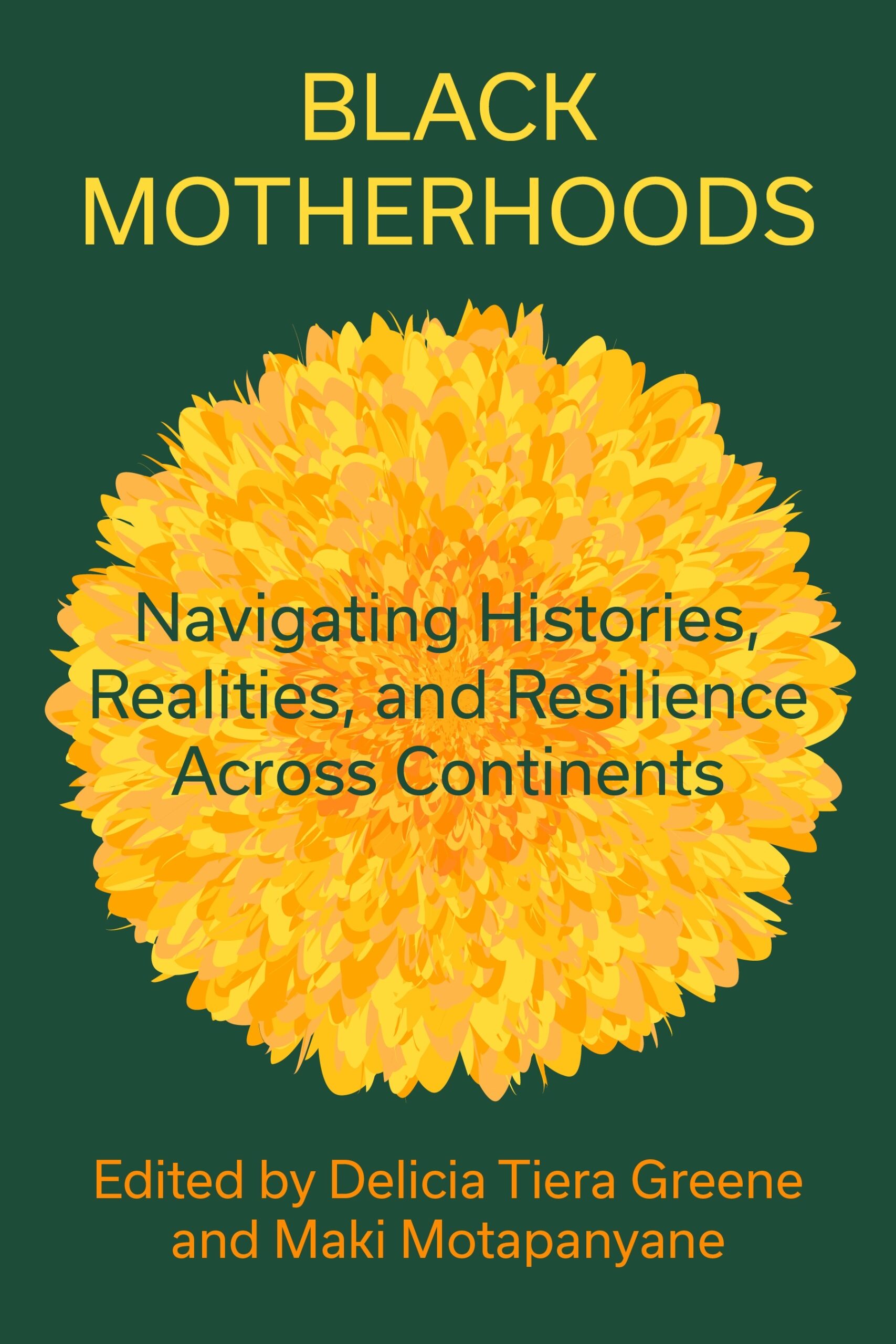
Price: $39.95
Page Count: 300
Publication Date: August 2027
ISBN: 978-1-77258-645-9
Essential, timely, and deeply engaging, this collection tells us why Black motherhood matters. Through poetry, personal narrative and critical scholarship, this volume is a call for scholars to challenge their thoughts on mainstream maternal experiences and dominant narratives, and affirm Black motherhood as a space of knowledge, care, resistance, and possibility. Grounded in Black Feminist thought contributors expand conversations about reproductive justice, inequity and community, and lean into the political importance and complexity that is Black motherhood. This volume offers important insights for scholars, students, practitioners, and communities alike.
--Shana Calixte Pitawanakwat, Black queer scholar, health equity leader, and community advocate
Introduction
Maki Motapanyane & Delicia Tiera Greene
Part I Contested Motherhoods and Reproductive Justice
Focus: the politics of who gets to count as a “good” mother, access to health care, and state/medical regulation of Black mothers’ bodies.
1. “It’s Not All Cookies ‘n Cream”: Black Doulas, Obstetric Racism and Birth Resilience
Angela Castañeda, Julie Johnson Searcy and Nicole Burts
2. Seeking Health Rights: The Perspective of Quilombola Mothers from Brazil
Simone Bohn and Patricia Krieger Grossi
Part II Othermothering, Theology, and Community Praxis
Focus: othermothering as everyday and professional practice, including biblical/womanist re-readings, maternal practices of child-free aunties, and Africentric social work.
3. “You Do Not Have to Push Out a Baby to Push Humanity Forward”: Child-free Aunties Othermothering in the Black Family and in Black American Culture
Delicia Tiera Greene
4. When Momma Shares: Paul’s Play “Mother” and Womanist Other Mothering
Stephanie Buckhanon Crowder
5. Othermothering as Praxis: Africentric Themes in Social Work Education and Practice
Kehinde Ekpudu, Delores Mulings, Florence Mudzongo, Wanda Thomas Bernard, Ellice Daniel, Kyiaisha Benton and Cynthia Kandi
Part III Violence, Loss, and the Public Face of Black Maternal Grief
Focus: mothers whose children are harmed or killed by racist state and social violence; how grief is represented and interpreted in media and literature; what is lost (homeplace, belonging) in the process.
6. Comparative Narratives of Black Motherhood Experience
Janvieve Williams Comrie
7. Sybrina Fulton and Lesley McSpadden Matter: Discourses of Black Motherhood in Online News Media
Kerry B. Wilson
8. “How sometimes they may get it wrong:” The Survival of Black Mothers, the Safekeeping of Children, and the Loss of Homeplace in Caul Baby by Morgan Jenkins
Andrea O’Reilly
Part IV Creativity, Wellness, and Intergenerational Resilience
Focus: how Black mothers and motherlines create freedom, wellness practices, and narrative/artistic strategies for survival and joy.
9. We Create Our Own Freedom by Any Means Necessary: Black Mothers’ Creativity
Sheree Mack
10. Building a Village from Scratch: Black Single Motherhood, Resistance, and Renewal in the Diaspora
Florence Mudzongo
11. Intergenerational Approaches to Wellness and Resilience in Black Motherhood
Maki Motapanyane and Maia Flo Motapanyane
Afterword
Maki Motapanyane & Delicia Tiera Greene
Delicia Tiera Greene
Delicia Tiera Greene is Associate Professor of Literacy Teaching and Learning at the University at Albany, SUNY. Her research examines Black girlhood, digital literacies, Black feminist rhetoric, and the sociopolitical dimensions of literacy. A community-engaged scholar and former school librarian and English educator, she explores relationships between literacy practices within and beyond classrooms. Her work centres Black girls’ knowledge and cultural expression, with attention to culturally relevant teaching, young adult literature, and critical research methodologies.
Maki Motapanyane
Maki Motapanyane is Associate Professor of Women and Gender Studies at Mount Saint Vincent University in Halifax, Nova Scotia. Her scholarship examines African feminist traditions, Black feminist epistemology, maternal theory, and the political economy of care. Her research and teaching also address popular culture, colonialism, and social change. She has edited books on motherhood and parenting, and her intellectual work is informed by longstanding commitments to community engagement, feminist inquiry, and collective social justice efforts.