Price: $55.95
Page Count: 460
Publication Date: October 2026
ISBN: 978-1-77258-596-4
Horror and Mother/hoods in a Global Cultural Imaginary is a comprehensive look at horror and its various iterations as they relate to the maternal. The chapters are timely: they rely on both well-established scholarship and new directions, with a keen eye to contemporary phenomena. It will appeal to scholars, students, and readers interested in the intersections of genre, gender, and cultural analysis. Owing to its remarkable depth and thematic range, this book may well become the defining volume on horror and motherhood.
- Zsuzsanna Lénárt-Muszka, assistant professor, University of Debrecen; co-editor of the upcoming Contemporary Maternal Subjectivities on the Page and on the Screen (Sciendo-De Gruyter Brill, 2027).
This is a much needed volume that brings together established voices in the fields of motherhood and monstrosity along with newer voices to offer insightful, much needed, and timely analyses of some of the most compelling texts.
- Bernadette M. Calafell, Ph.D.
Author, Monstrosity, Performance, and Race in Contemporary Culture
Horror and Mother/hoods in a Global Cultural Imaginary is a fascinatingly multi- and interdisciplinary take on mothers and motherhoods across media, cultures, and aesthetic forms. Bringing together rigorous scholarly essays alongside creative and artistic contributions, the volume demonstrates how horror interrogates maternal figures as sites of fear, desire, abjection, and resistance. Methodologically diverse, theoretically sophisticated, and consistently engaging, the book offers something for scholars of motherhood studies, gender studies, horror studies, and monster studies.
- Zsófia Orosz-Réti, assistant professor, University of Debrecen; co-editor of the upcoming Contemporary Maternal Subjectivities on the Page and on the Screen (Sciendo-De Gruyter Brill, 2027).
Introduction
Cristina Santos, Rachel Davidson, and Sarah Revilla-Sanchez
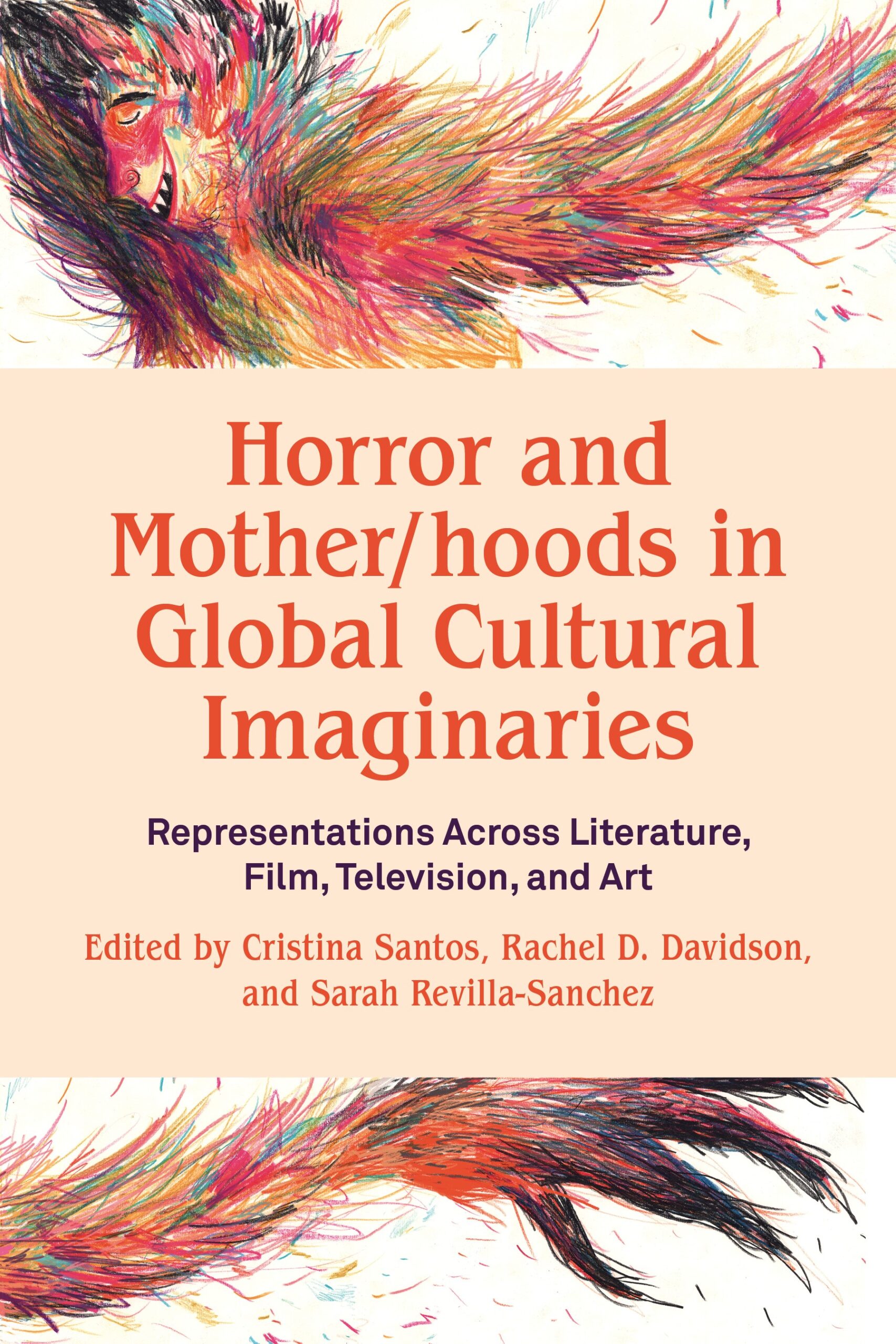
Nátalia Gregorini, Mulher Monstra [Monster Woman]
PART I De-colonizing Mother/hoods
Chapter 1: Broken Resurrects: Reanimating Mothering in New Indigenous Horror Cinema
Emily Naser-Hall
Chapter 2: A Black Mother’s Mixtape: Exploring Sonic Representation of Black Motherhood in Black Horror
Rockia K. Harris, Asha S. Winfield, Adwoa F. Baffour, and Mikayla J. Renwick
Chapter 3: Breaking La Maldición: Borderlands Theory, Motherhood, and Racialized Violence in Madres
Carlos A. Tarin, Leandra H. Hernández, and Sarah De Los Santos Upton
Chapter 4: Protesting through Horror: From Silence to Resistance in the Contemporary Puerto Rican Birth Story
Diana Aramburu
Carolina Davidson, Desolation
PART II Cinematic Horrors of Mother Blaming
Chapter 5: Responsibility for the Devil: Monstered Mothers in We Need to Talk About Kevin, The Babadook, and Hereditary
Amanda Konkle
Chapter 6: “Baby knows best”: Furies, Fetuses, and Feminist Resistance in Prevenge
Rachel Davidson and Lara C. Stache
Chapter 7: Like Mother, Like Daughter: Artificialized Femininity, Transmisogyny, and the Mother-Child Relationship in Psycho, Sleepaway Camp, and Seed of Chucky
Emily Sanders-Whiteley
Nátalia Gregorini, Polaroide [Polaroid]
PART III Politics of Care and Beyond Human Mothering
Chapter 8: The Nature of Care: A Creative Practice Exploration of Object as Mother in Horror
Maxine Gee
Chapter 9: Adopting the Forest: Mothering the Arboreal Other
Lindsay S. R. Jolivette
Chapter 10: “I’ll tuck the children in”: Bodily Rights, Cyborgs, and Posthuman Motherhood in Ridley Scott’s Prometheus and Alien Covenant
Sharon Crossett
Chapter 11: Mrs. Jaws at the Edge of the World
Genevieve Jones
Nátalia Gregorini, Solar 1 & Solar 2
PART IV Monstrous Mothers: Vampires, Witches, Werewolves, and Other Creatures
Chapter 12: Mothers Suck: Three Centuries of Vampire Narratives
Lisa Lampert-Weissig
Chapter 13: “that ugly witch has raised the very divil!”: Feral Mothers, Ecosemiotics, and Witchy Biologies in American Dime Novels
Nicole C. Dittmer
Chapter 14: Defanging the Werewolf: Domesticating the Monstrous-Feminine in Nightbitch
Marylou R. Naumoff
Chapter 15: Gyeongseong Creature, the Monster/Mother, and the Monstrous-Feminine:
Exploring the Horrors of the Japanese Occupation in a K-drama Series
Stephanie L. Young
Chapter 16: Oh Things I Have Slept Through
Katie Thompson
Carolina Davidson, Tastes Like War
PART V Bodily Autonomy, Reproductive Labour, and Mother Work
Chapter 17: The Cult of Motherhood: Fertile Bodies, Bodily Autonomy, and the Horror of Complicity in Anne Heltzel’s Just Like Mother
Monica Millar
Chapter 18: Interrogating the Normalization of White Motherhood in American Horror Story
Maggie Riegel
Chapter 19: Mother for Hire: Exploring the Neo-Governess in M. Night Shyamalan’s Servant
Amy Coles
Chapter 20: Quisiera ser un pulpo [I wish I was an octopus]
Carla Portillo Delgado
Nátalia Gregorini, The First Monster
PART VI Traumatized and Traumatizing Mothers
Chapter 21: The Ghosts that Surround Us: Maternal Trauma and Alienated Motherhood in the Works of Mike Flanagan
Irene Raya Bravo and Víctor Hernández-Santaolalla
Chapter 22: The Horror of Mothering in Ireland’s Magdalene Laundries and The Devil’s Doorway
Sandra Costello
Chapter 23: The Monstrous Mother: A Personal Journey through Motherhood, Loss, and the Psychological Haunting under the Gothic-Jungian Lens
Alicia Domínguez Pérez
The Editors
List of Contributors
Cristina Santos is an Associate Professor at Brock University. Her books Unbecoming Female Monsters: Witches, Vampires and Virgins (2016) and Untaming Girlhoods: Storytelling Female Adolescence (2023) explore the various constructs of monstrous women and deviant girlhoods. Her research and various publications focus on an intersectional feminist perspective of literature, film, television, popular culture, and mythology with a focus on the socio-cultural concept of deviance and its impact on the construction of identity.
Rachel D. Davidson is an Associate Professor at Hanover College in the Department of Communication. Her research broadly addresses rhetoric and public culture with interests in motherhood, caregiving, and social advocacy. Rachel’s research has appeared in Communication Quarterly, Women and Language, Rhetoric of Health and Medicine, and Disability Studies Quarterly. Rachel has co-authored the books, The Avenging-Woman On-Screen: Female Empowerment and Feminist Possibilities (2023), and Gilmore Girls: A Cultural History with Lara C. Stache.
Sarah Revilla-Sanchez is a doctoral candidate in Hispanic Studies at the University of British Columbia in Canada. Her dissertation tracks how contemporary literary and artistic works by Mexican women are increasingly engaging with horror and the Gothic mode to grapple with gender-based violence. Some of her other interests include Testimony, Sound Studies, and Digital Humanities.